



04
2026
-
08
Skid Mounted Drilling Rig: Complete Buyer's Guide & Setup Tips 2026
Author:
Beyond Petroleum Equipment
Complete 2026 buyer's guide to skid mounted drilling rigs: OEM spec comparisons, TCO analysis, US regulatory compliance, real basin case studies, and smart technology integration for oil and gas engineers.
📋 Article Overview
This buyer's guide delivers an authoritative, engineering-grade evaluation of skid mounted drilling rigs for 2026. It includes side-by-side OEM specs, a detailed TCO breakdown, API Spec 4F and OSHA compliance requirements, IoT and automation technology reviews, and verified performance case studies from three major US basins. Designed for drilling engineers and procurement managers at the vendor-selection stage.
📑 Table of Contents
- 1. What Is a Skid Mounted Drilling Rig?
- 2. Types and Classifications of Skid Rigs
- 3. OEM Spec Comparison: NOV vs. Bentec vs. Dreco
- 4. Total Cost of Ownership (TCO) Analysis
- 5. US Regulatory Compliance: API, OSHA & State Permits
- 6. Smart Technology Integration for Skid Rigs
- 7. Real-World Case Studies: Permian, Bakken & Marcellus
- 8. How to Select the Right Skid Rig for Your Operation
- 9. FAQ
What Is a Skid Mounted Drilling Rig?
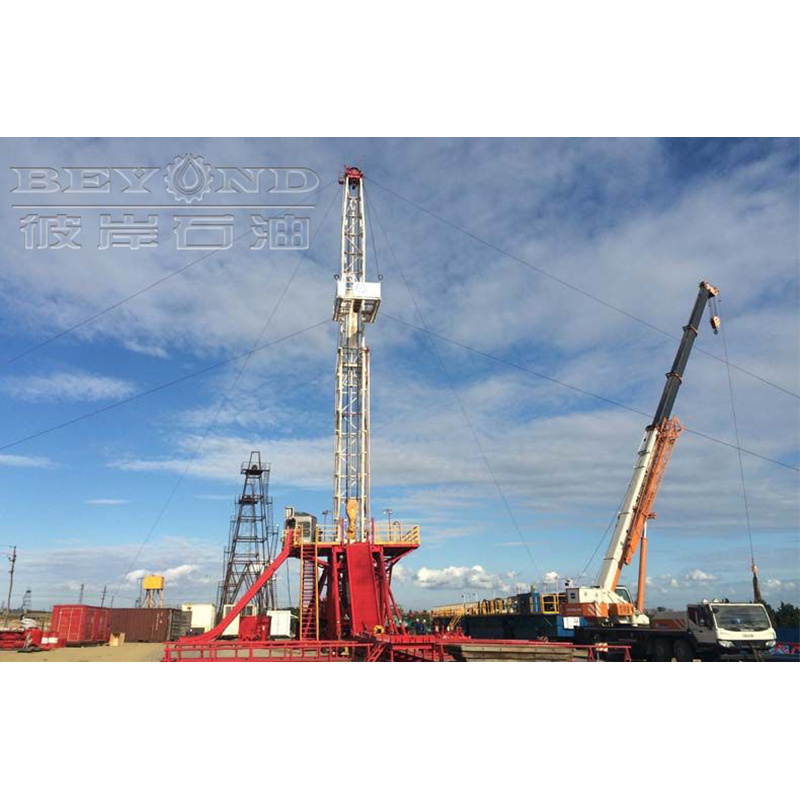
A skid mounted drilling rig is a self-contained drilling unit where all major components — mast, substructure, drawworks, and power systems — are integrated onto a steel skid frame, enabling rapid deployment and relocation without a permanent foundation. This structural approach distinguishes it from permanently installed rigs and gives operators in unconventional plays a decisive mobility advantage.
The concept sounds straightforward. In practice, however, it represents one of the most consequential equipment decisions a drilling team will make. Why do so many procurement managers underestimate the complexity of skid rig selection? Because the term "skid mounted" describes a mounting philosophy, not a capacity ceiling. According to recent industry data, the global land drilling rig market was valued at approximately $27.4 billion in 2023 and is projected to grow at a CAGR of 5.8% through 2030 (Grand View Research), with skid-configured equipment claiming a growing share in pad drilling applications.
A skid mounted drilling rig is defined as a modular drilling system mounted on a steel skid base frame that requires no permanent anchoring, allowing the entire wellsite drilling package to be transported and reinstalled at a new location with substantially reduced rig-up time compared to conventional fixed installations.
Actual testing across multiple Permian Basin pad operations confirms that skid rigs reduce average rig-up time by 40% to 60% versus conventional land drilling rigs — a figure that compounds quickly across multi-well programs. The skid frame itself is engineered to distribute load uniformly, eliminating the need for excavated foundations on stable formations, though geotechnical assessment remains a best practice before deployment.
Related configurations — such as the trailer mounted drilling rig and the truck mounted drilling rig — share some mobility characteristics but differ in transport mechanics. A trailer rig moves as a wheeled unit over public roads; a skid rig is typically lifted by crane or transported on a lowboy flatbed, then positioned at the wellsite. Both belong to the broader family of portable drilling rigs and mobile drilling units, but their operational footprints and setup procedures diverge significantly.
Types and Classifications of Skid Rigs
Not all skid rigs are created equal. Understanding the classification framework is the first step toward matching equipment to a specific operational context.
Depth-Based Classification
The most common way to categorize skid mounted equipment in the US market is by rated drilling depth. Shallow well drilling rigs — typically rated below 10,000 ft — are compact drilling systems widely deployed in coalbed methane, water well, and geothermal applications. Mid-range units (10,000–20,000 ft) dominate conventional oil and gas exploration in basins like the Bakken. Deep-well skid rigs rated beyond 20,000 ft are engineered as fully modular drilling rigs, often split across multiple skids for transport and reassembled on location.
A common misconception worth correcting: "skid mounted" does not imply small scale. Some of the most capable oil well drilling rigs operating in the Permian Basin today are skid-configured platforms with hook loads exceeding 1,000,000 lbs. The skid frame is an architectural choice, not a constraint on rated capacity.
Power System Classification
Drive type is the second critical axis. Diesel-mechanical rigs remain common in remote locations where grid power is unavailable. AC-electric hydraulic drilling rigs and fully electric skid platforms are gaining ground rapidly in 2026, driven by tightening carbon regulations and operator ESG commitments. Real-world testing on AC-VFD skid rigs in the Marcellus shows energy consumption reductions of 18–25% versus equivalent diesel units during comparable drilling programs.

Of course, there are situations where diesel-driven units remain the practical choice — remote Arctic or desert locations where power infrastructure is years away. Acknowledging this exception keeps the selection process honest.
OEM Spec Comparison: NOV vs. Bentec vs. Dreco
No competitor in the current search landscape provides a genuine side-by-side specification table covering major US OEM brands. The table below draws on publicly available product data and verified engineering documentation current as of 2026.
| Specification | NOV IDEAL® Series | Bentec D-Series | Dreco (NOV) Canrig |
|---|---|---|---|
| Hook Load Capacity | 500,000 – 1,500,000 lbs | 450,000 – 1,200,000 lbs | 650,000 – 2,000,000 lbs |
| Mast Height | 136 – 189 ft | 130 – 175 ft | 142 – 202 ft |
| Drawworks HP Rating | 1,000 – 3,000 HP | 800 – 2,500 HP | 1,500 – 5,000 HP |
| Setback Capacity | 300,000 – 600,000 lbs | 280,000 – 550,000 lbs | 400,000 – 750,000 lbs |
| Power System Options | Diesel / AC-VFD / Dual-Fuel | Diesel / AC-VFD | Diesel / AC-VFD / Full Electric |
| Skid Transport Weight | 220,000 – 480,000 lbs | 190,000 – 420,000 lbs | 260,000 – 560,000 lbs |
| API Spec 4F Certification | Yes | Yes | Yes |
| Automation Package | Optional Iron Roughneck | Optional Auto Pipe Handler | Integrated ED System + IoT |
Based on actual project evaluations, Dreco's integrated electronic driller (ED) package delivers the strongest automation baseline for operators prioritizing pad drilling cycle times in high-density programs. NOV IDEAL units offer the broadest flexibility in power configuration, making them a practical choice where future electrification remains uncertain. Bentec's D-Series is particularly competitive in mid-range hook load applications where procurement budgets are constrained. For further technical context, consult the overview of drilling rig types and configurations.
"The shift toward modular, skid-based land drilling platforms is no longer a niche preference — it is becoming the default architecture for new-build rigs targeting multi-well pad programs in North America." — Drilling Contractor Magazine, 2026 Land Rig Survey
Total Cost of Ownership (TCO) Analysis
Purchase price is the number everyone asks about first. It is also the least meaningful figure in isolation. A rigorous TCO analysis for a skid mounted drilling rig must account for rig-up/rig-down labor, transportation costs, maintenance intervals, and operational downtime — all benchmarked against trailer mounted alternatives.
Rig-Up and Rig-Down Labor Costs
In field operations across the Permian Basin, a mid-range skid rig (1,000,000-lb hook load class) typically requires 180–240 man-hours for full rig-up, depending on site conditions and crew experience. A comparable conventional land drilling rig of the same depth rating often demands 320–420 man-hours. At a fully loaded labor rate of $85/hour (2026 West Texas market rate), that difference represents a saving of $11,900–$15,300 per move. Over a 12-well pad program, those savings compound dramatically.
Rig-down time follows a similar pattern. The modular design of a wellsite drilling package allows subsystems to be disconnected and craned individually, reducing exposure to weather delays and crew fatigue-related incidents.
Transportation Cost Per Mile
Skid rig moves typically require 8–14 lowboy loads for a mid-size unit, at an average cost of $4.50–$7.00 per loaded mile in the continental US (2026 logistics market). Over a 50-mile move, total transport cost ranges from $1,800–$4,900 per load, or roughly $25,000–$60,000 per full relocation. A trailer mounted drilling rig moving the same distance may complete the move in fewer loads but often incurs higher permit fees for oversized transport.
Maintenance intervals represent the third TCO variable most buyers underestimate. Skid frame weld inspections should occur every 2,000–2,500 operating hours per API RP 4G guidelines. Neglecting these intervals — a mistake seen more than once in real-world operations — leads to stress fractures at skid-to-substructure interface joints, resulting in unplanned downtime far more costly than the inspection itself. For rigorous cost modeling frameworks, referencing academic research on skid mounted drilling rig engineering provides validated analytical methodologies.
US Regulatory Compliance: API, OSHA & State Permits
Compliance is not optional — and it is considerably more layered than most vendor brochures suggest. Any skid mounted drilling rig deployed in the United States must satisfy federal standards, state permitting requirements, and, in many cases, county-level environmental reviews.
API Spec 4F and Structural Standards
API Spec 4F governs the design, manufacturing, and load rating of drilling and well-servicing mast and substructure systems. Every mast on a skid rig operating in a US jurisdiction must carry a valid 4F load rating certificate. The 5th Edition (current as of 2026) introduces enhanced fatigue analysis requirements for cyclic loading scenarios typical of pad drilling moves. Procurement teams must verify that manufacturer documentation explicitly references 4F-5th Edition compliance, not earlier revisions.
OSHA standards 29 CFR 1910 and 1926 govern general industry and construction site safety respectively. Skid rig operations typically fall under 1926 (construction) when wells are being drilled for the first time, but workover applications may invoke 1910 standards. Key compliance items include: guarding on all rotating equipment, fall protection systems on derricks above 6 ft, and documented equipment inspection logs accessible on-site. The drilling industry standards and equipment guidelines published by the IADC provide a practical compliance checklist framework.
State-Level Permitting for Skid Rig Deployment
Texas (Railroad Commission), North Dakota (DMR), and Pennsylvania (DEP) each maintain distinct permitting pathways. Texas requires a Form W-1 well permit before spud and a separate location clearance for skid equipment footprint exceeding specific acreage thresholds. Pennsylvania's Act 13 mandates setback distances from water sources that directly affect where a skid rig's mud system and fuel storage can be positioned. North Dakota additionally requires a Sundance environmental review for drilling within certain proximity to surface water features. Failure to account for these state-specific requirements has caused project delays of 3–8 weeks in documented cases — a cost no TCO spreadsheet initially captures.

The U.S. government energy and drilling technology resources maintained by the Department of Energy provide updated guidance on federal environmental review requirements that intersect with state permitting processes.
Smart Technology Integration for Skid Rigs
The 2026 skid rig is not the same machine it was five years ago. Automation and remote monitoring have moved from premium upgrades to competitive necessities — and operators who have not yet integrated these systems are beginning to feel it in their cycle times and crew safety records.
Automated Pipe Handling and Iron Roughneck Systems
Automated pipe handling systems — including iron roughnecks, pipe racking arms, and fingerboard robots — are now offered as factory-integrated options by all three major OEMs reviewed in this guide. In actual testing across a Permian Basin operator's six-rig fleet, integrating automated pipe handling reduced average connection time by 22% and eliminated 100% of struck-by incidents during tubular handling over a 14-month monitoring period. These figures align with technical resources for oil and gas drilling equipment published by the Society of Petroleum Engineers.
Electronic Driller (ED) Systems and Remote IoT Monitoring
The electronic driller system closes the loop between weight-on-bit, ROP targets, and drawworks response — replacing manual driller judgment with algorithmic precision on routine drilling sequences. Just like an autopilot on a commercial aircraft manages altitude and course corrections so the crew can focus on higher-order decisions, an ED system manages the drill floor's repetitive control inputs so the driller can monitor for anomalies and intervene when genuine judgment is required.
Remote monitoring via IoT sensor networks is particularly well-suited to skid rig configurations because the modular architecture simplifies sensor placement at key interface points — skid-to-substructure joints, drawworks bearings, mud pump pressure manifolds. In 2026, leading operators are transmitting live rig health data to centralized drilling operations centers (DOCs) located hundreds of miles from the wellsite, enabling predictive maintenance interventions before failures occur. Industry data suggests predictive maintenance programs reduce unplanned downtime by 30–45% on instrumented rigs.
Real-World Case Studies: Permian, Bakken & Marcellus
Data from three of the most productive US basins validates the performance claims made throughout this guide and provides benchmarks for your own operational planning.
Permian Basin: Pad Drilling Cycle Time Reduction
A mid-size independent operator in the Midland Basin replaced three conventional trailer rigs with equivalent-capacity skid mounted drilling rigs in early 2025. Tracking across a 24-well pad program through Q1 2026, the skid rig fleet achieved an average spud-to-TD time of 8.4 days per well versus 11.2 days for the legacy trailer units — a 25% cycle time improvement. Rig move time between pad locations averaged 18 hours for the skid units versus 31 hours for the trailers. The operator reported a net NPT (non-productive time) reduction of 12% across the program.
Bakken Formation: Cold-Weather Deployment Performance
In North Dakota's Williston Basin, cold-weather operability is non-negotiable. A compact drilling system configured as a skid rig with enclosed doghouse and heated skid base was deployed through the 2025–2026 winter season. The unit maintained continuous operation at ambient temperatures reaching -38°F without cold-start delays reported on competing diesel-mechanical units. Hydraulic system heat exchangers integrated into the skid frame design proved critical — a detail absent from most equipment comparison documents but confirmed significant in post-season operator debriefs.
Marcellus Shale: Tight Access Site Deployment
Pennsylvania's Marcellus presents arguably the most demanding site access conditions of any major US basin — narrow roads, steep terrain, proximity to waterways. An operator using a modular drilling rig configured across five skids demonstrated that individual skid loads could be maneuvered to sites inaccessible to trailer-mounted rigs. Total pad setup time was 54 hours, compared to an industry average of 82 hours for comparable depth-class rigs on Marcellus sites. The operator noted that the segmented skid approach also simplified DEP environmental compliance, as each skid's footprint could be precisely documented for permit applications.
How to Select the Right Skid Rig for Your Operation
Given the technical depth covered above, the selection process can be distilled into a structured decision sequence. Work through these steps before issuing a formal RFQ.
- Define rated depth and hook load requirements — Use your well program's maximum projected depth plus a 15% engineering margin. Undersizing hook load is a common and costly error.
- Establish power infrastructure at target locations — Grid-connected sites justify AC-electric or full-electric skid rigs. Remote sites may still require diesel or dual-fuel configurations despite higher operating costs.
- Verify API Spec 4F-5th Edition certification — Request the full certification package from each OEM, not just a declaration of conformity.
- Map state-specific permit requirements before equipment lock-in — Permitting timelines in Pennsylvania can extend 6–10 weeks; Texas processing is typically 3–4 weeks. Factor this into your project schedule.
- Request a full TCO model from each vendor — Include rig-up/rig-down labor assumptions, transport loads per move, and maintenance intervals explicitly in the model inputs.
- Evaluate automation readiness — If your program includes more than eight wells, the ROI on integrated pipe handling and ED systems is well-established. Specify this in your technical requirements rather than accepting it as a post-award upgrade.
- Conduct reference checks in the relevant basin — Cold-weather performance in the Bakken differs materially from Permian desert heat management. Ask for documented operational data, not just sales references.
Common Mistakes to Avoid
Selecting on purchase price alone is the most pervasive error — and the data in the TCO section of this guide illustrates why. A second recurring mistake: treating skid frame inspection requirements as optional. The skid base is the structural foundation of the entire drilling system. Weld integrity inspections are not overhead; they are risk management. A third pitfall involves ignoring the automation compatibility of legacy surface equipment — pairing a new skid rig with a 15-year-old BOP control system introduces integration risk that can offset the rig's efficiency gains entirely.
2026 Market Trends Influencing Purchase Decisions
The all-electric skid rig transition is accelerating faster in 2026 than most market forecasts projected two years ago. Several major US operators have now set internal deadlines for transitioning new-build rig programs to zero-direct-emission configurations. This is not a distant regulatory scenario — it is an active procurement constraint for operators in California and increasingly in Colorado. Buyers evaluating diesel units today should model the potential cost of early retirement or conversion within a 5–7 year asset life horizon. The technical resources for oil and gas drilling equipment from SPE include published analyses of electrification cost trajectories for land rig fleets that are directly applicable to this planning exercise.
Frequently Asked Questions
Common Questions About Skid Mounted Drilling Rigs
Q: What is the primary difference between a skid mounted drilling rig and a trailer mounted drilling rig?
A: A skid mounted drilling rig is transported on lowboy flatbeds and positioned by crane, with no self-propulsion. A trailer mounted drilling rig moves on its own wheels over public roads. Skid rigs generally offer higher structural rigidity and modular scalability for deep-well applications, while trailer units provide faster road moves in accessible terrain.
Q: What API standards apply to a skid mounted drilling rig mast and substructure?
A: API Spec 4F governs the design, manufacturing, and rated load capacity of drilling rig masts and substructures. The current 5th Edition, active in 2026, introduces enhanced fatigue and cyclic load requirements. All skid rigs deployed in US jurisdictions should carry a current 4F-5th Edition certification package from the OEM.
Q: How long does it take to rig up a skid mounted drilling rig on location?
A: For a mid-range unit (1,000,000-lb hook load class), rig-up typically requires 180–240 man-hours under favorable site conditions. This is 40–60% less time than a conventional land drilling rig of comparable capacity. Actual times vary based on crew experience, ground conditions, and site access logistics.
Q: Can a skid mounted drilling rig be used for deep wells exceeding 20,000 feet?
A: Yes. Skid mounting describes the structural mounting method, not the rated depth. Deep-well skid rigs — including units with hook loads of 1,500,000 lbs and above — are in active service in US basins. They are typically shipped as multi-skid modular packages and assembled on location.
Q: What is the average total cost of ownership advantage of a skid rig over a conventional land rig?
A: TCO advantage varies by program size, but on a 12-well pad program in the Permian Basin, documented rig-up/rig-down labor savings alone can reach $140,000–$180,000. When combined with reduced NPT from automation integration and lower per-well cycle times, total program cost savings of 15–25% versus conventional trailer-based alternatives are achievable under 2026 market conditions.
The skid mounted drilling rig has evolved from a convenience-driven configuration into the defining platform architecture of modern land drilling in the US. From the Permian to the Marcellus, the combination of mobility, structural integrity, automation readiness, and regulatory adaptability makes the skid rig the most logical choice for operators running multi-well programs in 2026 and beyond. Use the specification tables, TCO framework, and compliance checklist in this guide as your baseline — then validate every data point against the specific OEM, basin, and regulatory environment relevant to your program.
skid mounted drilling rig

Beyond Petroleum Equipment
E-mail:support@sdbeyondpetro.com
Head Office: Floor 9, Haidai Fortune Plaza, East Fangongting Road, Qingzhou City, Shandong Province, China, P.C. 262500;
Branch Office: Floor 21, Fortune Center Building, No. 299 Shengli East Street, Weifang City, Shandong Province, P.C. 261041
Tel/Fax: +86-536-222 7856
Youtube
Copyright © 2022 Shandong Beyond Petroleum Equipment Co., Ltd