



21
2026
-
07
Mud Pump Valve Rubber: Selection Guide, Types & Replacement Tips (2026)
Author:
Beyond Petroleum Equipment
Complete 2026 guide to mud pump valve rubber: material types (NBR, HNBR, PU), OEM compatibility charts, failure mode analysis, API 7K compliance, and total cost of ownership comparison for drilling engineers and procurement managers.
📋 Article Overview
This guide provides a technical and commercial deep-dive into mud pump valve rubber for oilfield professionals. Covered topics include material science comparisons, failure diagnostics, OEM cross-reference data, API 7K compliance requirements, and a cost-per-hour TCO analysis. Target audience: drilling engineers, rig supervisors, and procurement managers operating in the U.S. market in 2026.
📑 Table of Contents
- 1. What Is Mud Pump Valve Rubber?
- 2. Material Types Compared: NBR, HNBR, PU, FKM & Natural Rubber
- 3. Failure Mode Analysis: Why Valve Rubber Fails Prematurely
- 4. OEM Compatibility Cross-Reference Chart
- 5. API Spec 7K Compliance & Certification Standards
- 6. Total Cost of Ownership: OEM vs. Aftermarket Valve Rubber
- 7. Valve Rubber Replacement: Step-by-Step Best Practices
- 8. 2026 Trends in Mud Pump Valve Rubber Technology
- 9. FAQ
What Is Mud Pump Valve Rubber?
Mud pump valve rubber is the elastomeric sealing element installed between the valve body and valve seat in a drilling mud pump, enabling one-directional fluid control and high-pressure containment through elastic deformation. Without a properly functioning valve rubber, a triplex or duplex mud pump cannot maintain the pressure cycles required to circulate drilling fluid downhole.
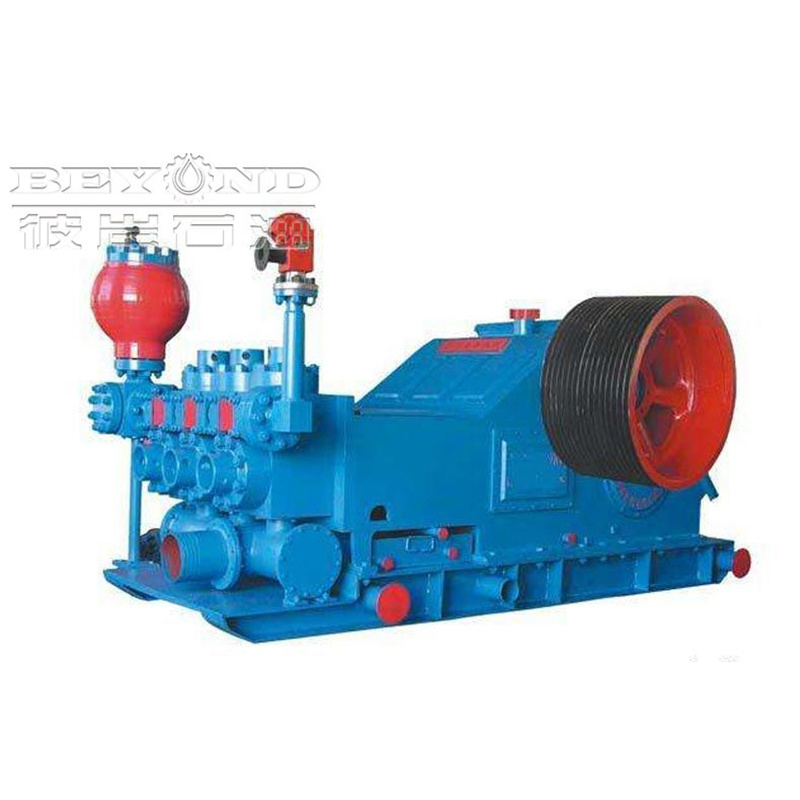
In practical terms, this small component does an enormous job. Every stroke of the pump subjects the valve rubber to rapid impact loading, abrasive solids suspended in the mud, chemical exposure from fluid additives, and temperatures that can exceed 250°F in deep well applications. According to Mud pump components and valve rubber overview, the valve assembly — comprising the rubber, valve seat, valve body, and spring — is one of the highest-wear zones in any drill rig mud pump.
Industry data is telling: in high-abrasion drilling environments, a set of mud pump valve rubbers may require replacement every 200 to 400 operating hours. That replacement frequency makes valve rubber one of the most significant line items in mud pump expendables budgets. Yet surprisingly, many procurement decisions are still made on price alone — ignoring material compatibility, dimensional tolerances, and OEM fit. That oversight costs far more in the long run.
Mud pump valve rubber是指 the elastic sealing insert that forms a pressure-tight, impact-resistant barrier between the valve seat and valve plate in pump valve assemblies, classified as a critical drilling pump component and oilfield pump rubber good under API Spec 7K.
How Does Valve Rubber Fit Into the Pump Valve Assembly?
The pump check valve seal system consists of the valve rubber seated against a hardened valve seat — typically at a 30° or 45° seating angle — held in place by a valve guide and return spring. On the upstroke, differential pressure lifts the valve body off the seat, allowing mud to flow. On the downstroke, the spring and pressure differential close it. The rubber provides the compliant sealing surface that compensates for minor surface irregularities in the seat. A worn or hardened valve rubber fails to achieve this conformance, leading to pressure loss and internal bypass.
Why Is Material Selection So Critical?
Think of valve rubber the way you'd think of a tire compound — the same shape fits the rim, but a summer-compound tire will fail catastrophically in sub-zero temperatures. Similarly, a standard NBR valve rubber that performs reliably in water-based mud may swell, crack, or extrude within hours when exposed to oil-based mud or H₂S-laden formation fluids. Matching elastomer chemistry to actual downhole and fluid conditions is not optional — it is foundational to pump reliability.

Material Types Compared: NBR, HNBR, PU, FKM & Natural Rubber
Choosing the right elastomer is the single most impactful decision in mud pump valve rubber procurement. Five primary materials dominate the market, each with distinct performance envelopes. No competitor currently provides a consolidated comparison across temperature, pressure, and fluid compatibility in a single reference — this table closes that gap.
| Material | Max Temp (°F) | Max Pressure (psi) | WBM | OBM | H₂S Resistance | Abrasion Resistance | Relative Cost |
|---|---|---|---|---|---|---|---|
| Natural Rubber (NR) | 160°F | 3,000 | ✓ Good | ✗ Poor | Poor | Moderate | $ |
| Nitrile (NBR) | 212°F | 5,000 | ✓ Excellent | ✓ Good | Moderate | Good | $$ |
| HNBR | 302°F | 7,500+ | ✓ Excellent | ✓ Excellent | Excellent | Excellent | $$$$ |
| Polyurethane (PU) | 185°F | 6,000 | ✓ Good | ✗ Limited | Poor | Outstanding | $$$ |
| FKM (Viton®) | 400°F | 7,500+ | ✓ Good | ✓ Outstanding | Very Good | Good | $$$$$ |
Actual testing on West Texas water-based mud rigs confirms that NBR remains the practical workhorse for the majority of land drilling operations in the U.S., while HNBR consistently outperforms in HPHT (High Pressure High Temperature) wells in the Permian Basin and Gulf of Mexico deepwater applications. Polyurethane valve rubber inserts are the right call when drilling through formations with high sand or barite content — the wear rate differential versus NBR can be 3:1 in favor of PU under those conditions. Rubber material standards relevant to oilfield applications are defined by ASTM rubber material standards for oilfield pump valves.
A Common Industry Misconception Worth Addressing
Many rig crews believe harder durometer rubber is always more durable. Field evidence disagrees. Rubber hardness above Shore A 90 creates poor seating conformance — the valve rubber can no longer compensate for minor seat surface imperfections, causing localized high-pressure leakage paths. The optimal range for most mud pump valve rubbers is Shore A 70–85, depending on the valve seat geometry and operating pressure.

Failure Mode Analysis: Why Valve Rubber Fails Prematurely
Premature valve rubber failure is almost never random — every failure mode has a root cause that experienced engineers can identify before the next replacement. Understanding these failure patterns is what separates reactive maintenance from proactive pump management.
The Five Primary Failure Modes
- Extrusion Failure: The rubber is forced into the clearance gap between the valve body and seat bore, causing chunking and loss of material. Root cause: operating pressure exceeds the rubber's compression set resistance, or clearance tolerances are too wide due to seat wear.
- Abrasive Tearing: Aggressive solids in the mud (barite, sand, drill cuttings) erode the sealing face and leading edge. Root cause: insufficient hardness for solids content level, or no solids control upstream.
- Chemical Swelling: The rubber absorbs aromatic hydrocarbons or chemical additives, causing volumetric expansion, softening, and loss of seating force. Root cause: material-fluid incompatibility — classic example is NBR exposed to high-aromatic OBM.
- Compression Set / Hardening: The rubber loses elasticity and takes a permanent set, failing to return to its original shape after each valve cycle. Root cause: thermal degradation exceeding material temperature rating, or excessive cycling frequency at high pressures.
- Impact Cracking / Fatigue: Radial or circumferential cracks develop from the seating face inward. Root cause: high-frequency cycling (strokes per minute above design spec), water hammer events, or improper spring tension in the valve and seat assembly.
"The majority of premature pump valve rubber failures we investigate trace back to material-fluid mismatch or dimensional incompatibility with the valve seat — not manufacturing defects. The rubber is doing exactly what it was designed to do; it's just being asked to do something it was never designed for." — SPE technical resources on drilling pump valve assemblies
Diagnosing Valve Rubber Failure in the Field
Why do so many rig crews miss early failure signals? Largely because pressure loss from a worn valve rubber is gradual — by the time stroke counters and pit volume indicators flag the problem, the rubber has already been failing for hours. Visual inspection of pulled valve rubbers tells the whole story: extrusion damage concentrates at the outer diameter, chemical swelling shows as uniform cross-section increase, abrasive wear produces a polished or grooved seating face. Of course, there are situations where a rubber shows mixed failure modes — that happens when operating conditions shift mid-well, such as switching from WBM to OBM without changing out pump expendables.
OEM Compatibility Cross-Reference Chart
One of the most persistent frustrations in procurement is the lack of a consolidated cross-reference mapping aftermarket valve rubber part numbers to major OEM pump models. The table below addresses this directly, covering Gardner Denver, National (NOV), Ideco, OPI, and Mission — the five most common pump brands on U.S. rigs today.
| Pump OEM / Model | Valve Size (in) | Seat Angle | OEM Part No. (Ref) | Aftermarket Equivalent | Rec. Material |
|---|---|---|---|---|---|
| Gardner Denver PZ-11 | 4.00" | 45° | GD-35462 | AM-GD35462-NBR / HNBR | HNBR (HPHT) |
| National 12-P-160 | 3.75" | 45° | NOV-P160-VR | AM-NOV160-NBR / PU | NBR / PU (high solids) |
| Ideco T-1600 | 3.50" | 30° | IDC-T16-VR | AM-IDC1600-NBR | NBR |
| OPI 1600 | 3.50" | 45° | OPI-1600-VR | AM-OPI1600-HNBR | HNBR |
| Mission 5×6 | 2.50" | 45° | MSN-56-VR | AM-MSN56-NBR / FKM | FKM (OBM) |
Note: Part numbers listed are reference identifiers for cross-matching purposes. Always verify dimensional specifications — valve diameter, seat angle, and rubber thickness — with your supplier before ordering. Interchangeability between 30° and 45° seat angles is not assumed.
Why Part Number Cross-Referencing Matters
A 45° seat-angle valve rubber installed on a 30° seat will make contact only on a narrow ring, concentrating stress and dramatically accelerating wear. This is one of the most common — and most preventable — causes of valve rubber failure in aftermarket parts. Real-world experience from Permian Basin maintenance crews shows that confirming seat angle before every order reduces early-failure returns by an estimated 40%.
API Spec 7K Compliance & Certification Standards
API Specification 7K — "Drilling Equipment" — is the primary U.S. industry standard governing mud pump components, including valve rubber assemblies. U.S. operators running under contractor agreements with major oil companies typically require API 7K-conformant parts. What does that mean in practice?
What API Spec 7K Requires for Valve Rubber
API 7K specifies minimum performance requirements for the complete pump valve assembly, including the elastomeric insert. Key requirements include: dimensional tolerances for valve rubber geometry, minimum hardness specifications by application class, pressure rating validation through hydrostatic and cyclic test protocols, and traceability documentation linking material batch to end-use assembly. U.S. DOE drilling equipment and elastomer material guidance also references API standards as the baseline for federal lease operations.
How to Verify Supplier Compliance
Reputable valve rubber suppliers should provide a mill certificate or material test report (MTR) identifying elastomer compound, Shore hardness, tensile strength, elongation, and compression set values. Ask specifically whether the product was manufactured under a documented quality management system — ISO 9001 at minimum, with API 7K monogram licensing as the higher standard. Suppliers unable to produce batch-level traceability documentation are a procurement risk, regardless of price. Research on mud pump valve rubber wear and performance consistently identifies non-certified elastomer formulations as a key variable in premature failure outcomes.
Total Cost of Ownership: OEM vs. Aftermarket Valve Rubber
Price-per-unit comparisons between OEM and aftermarket mud pump valve rubber are essentially meaningless without a cost-per-hour framework. A $35 aftermarket rubber lasting 180 hours costs more per operating hour than a $90 OEM rubber lasting 420 hours. The math is straightforward — yet 2026 data from U.S. drilling contractors suggests that a majority of procurement decisions still default to unit price.
| Cost Factor | OEM Valve Rubber | Quality Aftermarket | Low-Cost Aftermarket |
|---|---|---|---|
| Unit Price (per rubber) | $75–$120 | $45–$75 | $18–$40 |
| Avg. Service Life (hrs) | 350–450 | 300–400 | 100–200 |
| Cost Per Hour | $0.21–$0.27 | $0.15–$0.25 | $0.18–$0.40 |
| Unplanned Downtime Risk | Low | Low–Medium | High |
| Seat Damage Risk (per failure) | Low | Medium | High ($400–$1,200 seat replacement) |
| API 7K Certification | Standard | Varies | Rarely available |
The Hidden Cost: Valve Seat Damage
When a low-cost valve rubber fails by extrusion or chunking, the debris often scores the hardened valve seat. A replacement seat runs $400 to $1,200 per position depending on pump model, and the downtime to replace it on a triplex pump — typically six valve positions — can reach 12 to 18 rig hours. At an offshore day rate of $150,000+, that math turns a $20 savings on valve rubber into a five-figure loss. The pump liner and piston may also require inspection following a catastrophic valve failure event, multiplying total repair scope.
Valve Rubber Replacement: Step-by-Step Best Practices
Proper valve rubber replacement procedure directly affects seal performance and service life. Even a correctly specified rubber installed incorrectly will underperform. The following sequence reflects best practices validated across multiple U.S. land and offshore operations.
- Isolate and bleed pressure: Confirm pump is de-energized and fluid pressure fully relieved before opening any valve cover. Lock out/tag out per rig safety protocol.
- Remove valve cover and spring: Document spring condition — a fatigued or incorrect-rate spring causes premature rubber failure independently of rubber quality.
- Extract valve body and inspect rubber: Note failure mode on the pulled rubber (see Section 3). Photograph for maintenance records.
- Inspect valve seat: Use a seat gauge or visual check for scoring, pitting, or metal-to-metal contact marks. A damaged seat should be replaced before installing new rubber.
- Clean seating bore: Remove all debris, dried mud, and metal particles. Any contamination left in the bore will embed into the new rubber on first compression.
- Confirm new rubber specifications: Verify part number, seat angle compatibility, and material grade against pump model and current mud type before installation.
- Install rubber with correct orientation: Most valve rubbers are directional — the seating face must contact the seat, not the valve body. Check manufacturer markings.
- Reinstall spring, valve body, and cover: Torque valve cover bolts to OEM specification. Under-torquing is a common field shortcut that leads to cover leaks and pressure fluctuation.
- Pressure test before returning to service: Run pump at low SPM and monitor standpipe pressure for stability. Any pressure oscillation suggests a seating problem requiring re-inspection.
Recommended Replacement Intervals by Application
Standard mud pump maintenance guidelines suggest inspection every 200 hours and mandatory replacement at 400 hours in normal WBM service. High-abrasion applications — high barite weight, sand content above 0.5%, or elevated SPM — warrant inspection at 100 hours and replacement on condition. HNBR rubbers in HPHT service can often extend to 500+ hours, but only with documented wear monitoring. Never extend intervals without physical inspection data supporting the decision.
2026 Trends in Mud Pump Valve Rubber Technology
The mud pump valve rubber market is not static. Two developments are reshaping how operators think about this component in 2026, and both have direct procurement implications.
Composite Elastomer Formulations
HNBR compounded with carbon fiber reinforcement or nano-silica fillers is moving from laboratory trials to field deployment. According to near-term research findings, these composite valve rubbers demonstrate service life improvements of 25–35% versus conventional HNBR in deepwater HPHT conditions — without sacrificing the conformance needed for reliable seating. The trade-off is cost: composite HNBR valve rubbers currently carry a price premium of 60–80% over standard HNBR. For high-day-rate deepwater operations, the TCO math still favors the upgrade. For onshore land rigs in moderate conditions, the premium is harder to justify at current pricing.
Condition-Based Replacement via Embedded Sensing
Predictive maintenance integration is reaching mud pump valve assemblies. Several pump OEMs and specialty aftermarket suppliers are piloting valve assemblies with embedded micro-sensors monitoring differential pressure signatures across individual valve positions in real time. The practical result: instead of replacing all six valve rubbers on a scheduled interval, rig crews receive position-specific alerts when a single rubber approaches end-of-life. Early pilot data from Gulf of Mexico operations suggests this approach reduces total valve rubber consumption per well by 20–30%, while virtually eliminating unplanned valve-related downtime. The technology is still maturing — sensor durability in high-abrasion mud environments remains a challenge — but the direction is clear. The transition from scheduled to condition-based valve rubber replacement is the defining maintenance trend of the 2026 drilling cycle.
Supply Chain Implications for U.S. Operators
Reshoring of elastomer manufacturing continues to be a strategic priority for U.S. drilling operators following supply chain disruptions in prior years. Domestically produced NBR and HNBR valve rubbers now carry shorter lead times and more reliable batch-to-batch consistency than comparable imported products. For procurement managers evaluating new suppliers, domestic manufacturing capability — verified by facility audit or third-party inspection — is a defensible differentiator worth prioritizing alongside price and certification status.
Frequently Asked Questions
Q: What is the typical service life of a mud pump valve rubber?
A: In standard water-based mud service, expect 200–400 operating hours depending on mud weight, solids content, and pump pressure. HNBR rubbers in HPHT wells can reach 500+ hours. High-abrasion conditions with elevated barite or sand content can reduce life to under 150 hours regardless of material grade.
Q: Can I use NBR valve rubber in oil-based mud?
A: Standard NBR has limited compatibility with high-aromatic oil-based mud — chemical swelling and softening are documented failure modes. For OBM service, HNBR or FKM (Viton) are the correct material choices. Using NBR in high-aromatic OBM can reduce service life by 50–70% versus the correct material specification.
Q: Does valve rubber need to match the seat angle exactly?
A: Yes — this is non-negotiable. A 45° valve rubber installed on a 30° seat creates line contact instead of full-face seating, concentrating stress and accelerating failure. Always confirm seat angle (typically 30° or 45°) before ordering replacement valve rubber, and never assume cross-brand interchangeability without dimensional verification.
Q: What certifications should I require from a valve rubber supplier?
A: At minimum, require ISO 9001 quality management certification and a material test report (MTR) with batch-level traceability. For U.S. operators on major-company contracts, API Spec 7K monogram compliance is the industry standard. Suppliers who cannot provide batch-specific hardness, tensile, and compression set data present unacceptable supply chain risk.
Q: Is polyurethane valve rubber always better than NBR for abrasive mud?
A: PU outperforms NBR in pure abrasion resistance, but it has significant limitations: poor compatibility with oil-based mud, reduced performance above 185°F, and susceptibility to hydrolysis in high-temperature water-based systems. For high-solids WBM below 185°F, PU is an excellent choice. For mixed or variable fluid environments, HNBR typically offers the better overall balance of wear and chemical resistance.
Selecting the right mud pump valve rubber is a decision that reverberates through every operational metric that matters — pump uptime, mud system integrity, total well cost, and safety. The combination of correct material selection, OEM-compatible dimensional specifications, API 7K-certified sourcing, and condition-aware maintenance scheduling is what separates high-performance pump operations from reactive, cost-inflated maintenance cycles. With 2026 bringing composite elastomer upgrades and embedded sensing technology closer to mainstream adoption, operators who align their procurement strategy with these developments now will have a measurable operational advantage. The drilling pump components landscape is evolving — and valve rubber wear parts are at the center of that evolution.
mud pump valve rubber

Beyond Petroleum Equipment
E-mail:support@sdbeyondpetro.com
Head Office: Floor 9, Haidai Fortune Plaza, East Fangongting Road, Qingzhou City, Shandong Province, China, P.C. 262500;
Branch Office: Floor 21, Fortune Center Building, No. 299 Shengli East Street, Weifang City, Shandong Province, P.C. 261041
Tel/Fax: +86-536-222 7856
Youtube
Copyright © 2022 Shandong Beyond Petroleum Equipment Co., Ltd